
River Strainers and Sweepers: Why Downed Trees are the Deadliest River Hazard
Why fallen trees in moving water act like fatal hydraulic traps, how to spot strainers around blind bends, and the aggressive self-rescue swimming technique if you get swept.
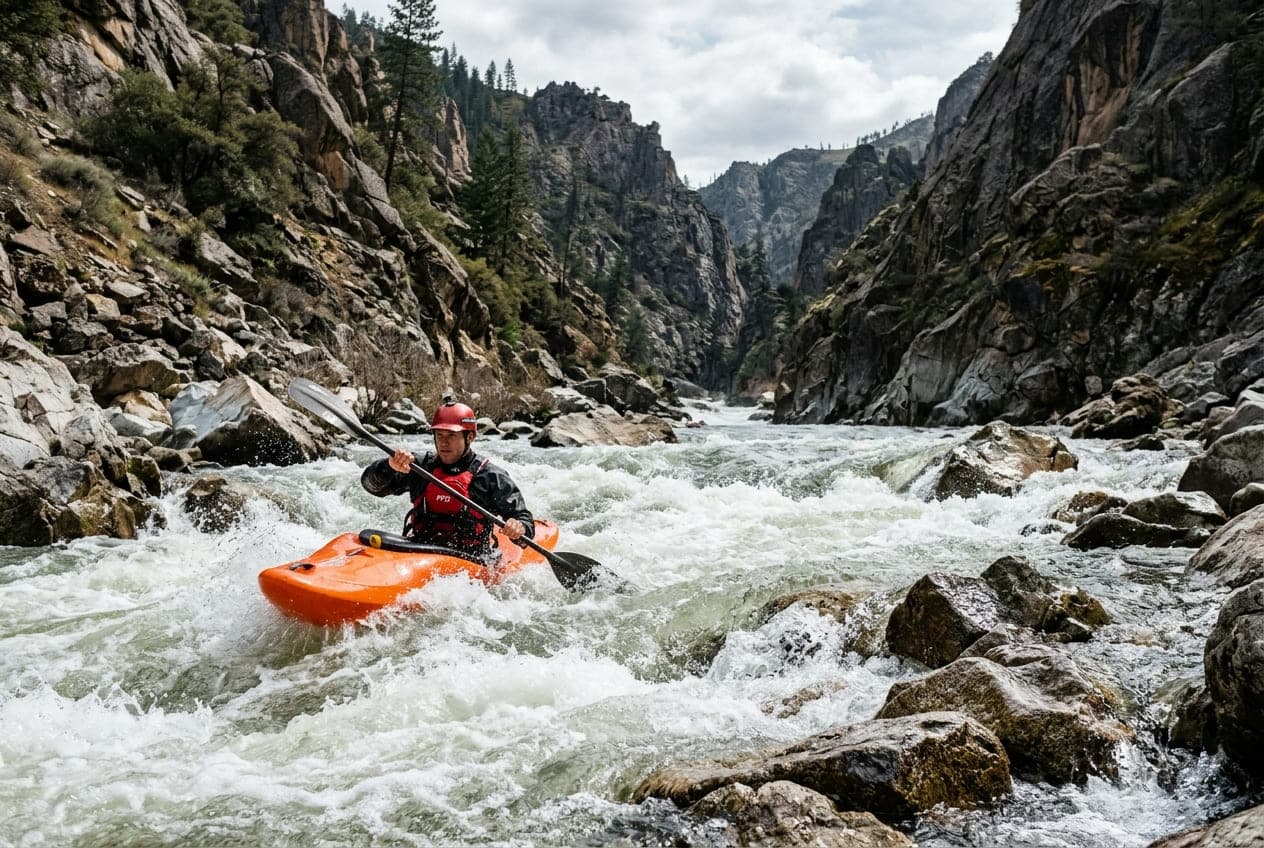
Ask swiftwater rescue teams what single obstacle causes the most drownings on moving rivers every year, and their answer is rarely Class V rapids or big waterfalls.
It is almost always a fallen tree.
In river terminology, a tree or log pile caught in current is called a strainer. The name describes exactly what it does: like a colander in your kitchen sink, it lets water pass right through while stopping and trapping anything solid—including kayaks, canoes, rafts, paddleboards, and human bodies.
Understanding how strainers work, why they form where they do, and how to avoid them is the single most important safety lesson any paddler can learn.
The Physics of a River Strainer
Water weighs 62.4 pounds per cubic foot. When water moves down a river channel at a moderate 4 to 6 miles per hour, that mass generates relentless lateral force.
If your kayak or canoe drifts against a rock in the middle of a rapid, the water piles up against the upstream side of your boat. You can lean into the rock, stabilize your craft on the cushion wave, and slide off.
A fallen tree behaves entirely differently:
- No Cushion Wave: Because the river flows freely through the branches and root wad, there is no protective water cushion pushing you away from the wood. The current pulls you directly into the trunk.
- The Underwater Pin: Once a boat or swimmer contacts the branches, water flows over the top of the obstacle. The downward suction pins you underwater against the tangle of limbs with hundreds of pounds of pressure.
- Impossibility of Fighting Current: At 5 miles per hour, the pressure against an adult chest pinned against a strainer can exceed 500 pounds. Even the strongest Olympic athlete cannot push themselves off a log against that much force.
Lateral Hydraulic Force = (Water Density) × (Current Velocity)²
At 6 mph, water pressure against a pinned body exceeds 500 lbs of force.
Where Strainers Hide: The Danger of Outside Bends
Strainers do not appear randomly in a river. They are placed there by the natural laws of river morphology.
In every winding river, centrifugal force pushes the fastest, deepest current toward the outside of the bend. This fast water constantly undercuts the riverbank, eroding the dirt around tree roots until large cottonwoods, sycamores, pines, or alder trees topple directly into the channel.
- Outside of Bends: Almost all newly fallen trees lie across the outside of river bends—exactly where the strongest current wants to carry your boat.
- River Braids and Side Channels: When a river splits around an island or gravel bar, fallen trees frequently jam across the narrow entrance of the side channel.
- Bridge Abutments: High water washes driftwood downstream until it catches against concrete bridge pillars, building massive, impenetrable log piles that create dangerous boil lines.
How to Spot and Avoid Strainers from Upstream
The key to surviving a strainer is never getting within two boat-lengths of it in the first place. Once you are floating within 15 feet of a downed tree in swift current, your options are down to near zero.
1. Listen for the Hiss
A large strainer in moving water makes a distinctive, loud hissing or boiling sound as tons of water force through the branches. If you hear loud rushing water around a blind corner on a river that is otherwise calm, pull into an eddy immediately and scout from the bank.
2. Recognize the River Horizon
If you are paddling downriver and the water ahead appears to vanish behind a row of horizontal branches or a root wad, do not assume you can slip underneath. Fallen trees often look like harmless sticks from upstream until you get close enough to see the 30-inch trunk submerged just beneath the surface.
3. Establish a Back-Ferry Early
The moment you spot a tree down across your channel:
- Angle your boat 45 degrees away from the obstacle.
- If the tree is on the right bank, point your stern toward the left bank and pull back on your oars or paddle strokes (a reverse ferry).
- By pointing your boat across the current and paddling backward, you let the river's own speed slide your boat sideways into the safe, open water on the inside bend.
4. Never Try to Duck Under a Sweeper
A "sweeper" is a fallen tree suspended just above the water surface. Beginners often make the fatal mistake of leaning backward and trying to duck under the trunk.
The moment the tree catches your chest or paddle, the river pushes the stern of your boat under, capsizing you into the tree's submerged branches beneath the surface. If you are about to hit an overhead branch you cannot avoid, drop your paddle, throw your chest flat against the front deck of your boat, and slide through with your head down.
Emergency Swimming Protocol: The Aggressive Crawl
If your boat flips and you find yourself swimming in fast current directly toward an unavoidable tree trunk, do not adopt the standard defensive swimming position (floating on your back with feet pointed downstream).
Floating feet-first into a strainer is deadly: the current sweeps your legs underneath the log, folding your body in half and trapping your head underwater beneath the trunk.
The Survival Move: Swim Over, Never Under
- Turn onto your stomach: Roll over and face the log directly.
- Sprint aggressively: Swim as fast as you can straight at the trunk with an explosive front crawl.
- Launch yourself up: The instant you reach the tree, throw your arms over the top of the trunk, kick violently with your legs to get your hips out of the water, and chest-crawl or belly-flop completely over the log onto the downstream side.
- Scramble onto the wood: If the log is high enough, pull yourself out of the water onto the top of the trunk and wait for help.
By swimming aggressively on top of the log, you use your forward momentum to prevent your body from being dragged underneath the trunk where the limbs and root balls will pin you.
When River Gauges Warn You About Strainer Hazards
Keep a close eye on USGS streamflow data right after heavy rainstorms or rapid spring snowmelt.
When a river gauge shows a sharp spike—surging into the High or Flood percentile brackets on ClearGauge—the high water tears mature trees off the banks and sends them floating downriver.
The two or three days immediately following a major flood event are the most dangerous time for strainers. Even on rivers you know intimately, new logjams and strainers will have formed across channels that were completely open the week before. Treat every blind bend on a dropping river like uncharted water.
Want to see this in action? Check real-time river conditions near you.
Explore All Rivers →