
Cold Water Shock & Hypothermia: The 1-10-1 Rule Every River Runner Must Know
Why sudden cold water immersion is deadlier than hypothermia, how water temperature affects muscle control, and essential gear strategies for spring runoff.
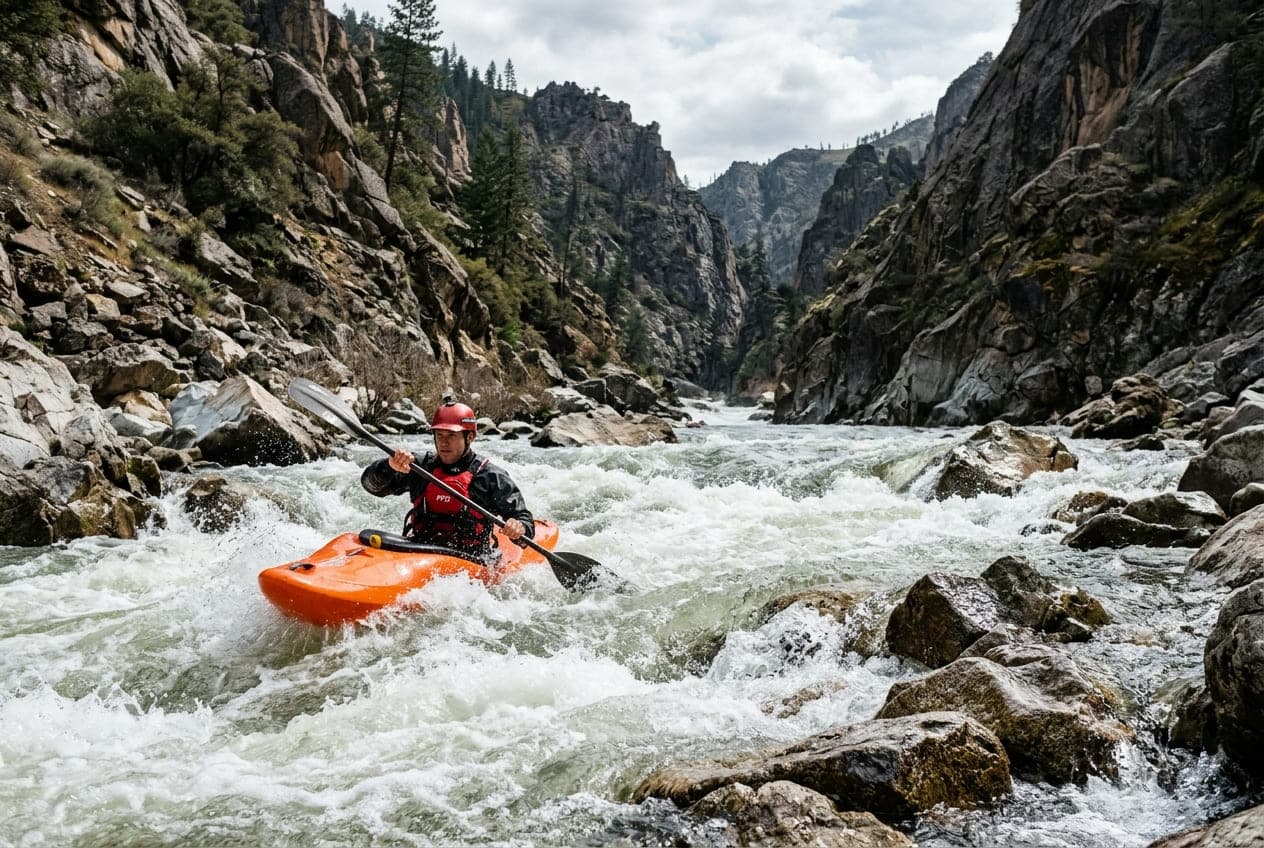
When river runners discuss cold water hazards, the conversation almost always gravitates toward hypothermia. While hypothermia is a serious medical emergency, it takes significant time to set in—typically 30 minutes to over an hour even in near-freezing conditions.
The immediate, far deadlier killer on spring rivers is Cold Water Shock.
Every spring, paddlers and fishermen capsize into swollen rivers fed by fresh mountain snowmelt. Despite being strong swimmers, many gasp uncontrollably, inhale freezing water within seconds, and drown long before their core body temperature drops even a single degree.
Understanding the physiological cascade of sudden cold immersion—and applying the evidence-based 1-10-1 Rule—is the single most important skill for surviving cold river water.
What is Cold Water Shock?
Cold water shock is an involuntary, autonomic nervous system response triggered when skin receptors experience a sudden, dramatic drop in temperature (generally any water below 60°F / 15°C).
The response is instantaneous and cannot be overridden by mental willpower or physical conditioning.
The Immediate Physiological Cascade:
- The Involuntary Torso Gasp: Skin cold receptors trigger an immediate, massive inspiratory gasp of up to 2 to 3 liters of air. If your mouth or nose is underwater when this gasp occurs, water is aspirated directly into the lungs, leading to laryngospasm or immediate drowning.
- Hyperventilation & Panic: Following the initial gasp, breathing rates skyrocket by up to 400%, accompanied by acute tachycardia (rapid heart rate) and a severe spike in blood pressure. This hyperventilation makes it nearly impossible to hold your breath while swimming through rapids.
- Peripheral Vasoconstriction: To preserve core temperature, the circulatory system immediately shunts blood away from the skin and extremities toward the core organs.
The 1-10-1 Rule of Cold Water Survival
Pioneered by Dr. Gordon Giesbrecht (one of the world's foremost cold-water physiology researchers), the 1-10-1 Rule outlines the chronological timeline of what happens to the human body during cold immersion:
| Timeline Phase | Physiological Phase | What You Experience | Life-Saving Action Required |
|---|---|---|---|
| Minute 1 | Cold Shock Response | Violent gasping, rapid hyperventilation, panic, heart spike | DO NOT SWIM. Focus solely on keeping your airway clear. Float on your back, fight the urge to thrash, and let breathing normalize. |
| 10 Minutes | Cold Incapacitation (Swim Failure) | Loss of finger dexterity, neuromuscular cooling, stiff arms/legs | SELF-RESCUE IMMEDIATELY. You have roughly 10 minutes of coordinated muscle control to exit the river or climb onto an eddy rock/boat. |
| 1 Hour | Clinical Hypothermia | Core body temperature drops below 95°F (35°C), mental confusion | PRESERVE CORE HEAT. If stranded, assume the HELP (Heat Escape Lessening Position) or huddle with partners while awaiting rescue. |
| Post-Immersion | Collapse & Re-warming Shock | Vasodilation upon rescue causing precipitous arterial blood pressure drop | GENTLE HANDLING. Keep patient horizontal, remove wet layers gradually, and insulate with dry sleeping bags. |
Water Temperature Risk Spectrum
Air temperature can be deceptively warm in late spring, creating what rescue personnel call the Thermal Trap: a sunny 75°F (24°C) afternoon combined with a snowmelt-fed river running at 45°F (7°C).
| Water Temp (°F) | Thermal Classification | Danger Level & Survival Expectation |
|---|---|---|
| 70°F+ (21°C+) | Warm / Mild | Minimal shock risk. Standard personal flotation precautions. |
| 60°F – 69°F (15°C – 20°C) | Cool | Breath control required. Gasp reflex possible in sensitive individuals. |
| 50°F – 59°F (10°C – 15°C) | Cold | Severe gasp reflex. Swim failure occurs in 10–15 minutes without thermal protection. |
| Below 50°F (< 10°C) | Imminently Dangerous | Extreme shock hazard. Total loss of useful hand/finger movement within 3–5 minutes. Drysuit mandatory. |
Thermal Protection: Neoprene Wetsuit vs. Breathable Drysuit
When boating or wading in rivers where the combined water temperature and air temperature total less than 120°F (the Rule of 120), thermal protective gear is non-negotiable.
1. Neoprene Wetsuits (Farmer John style)
- How They Work: Trap a thin layer of river water against your skin, which your body warms.
- Best For: Moderate water temperatures (55°F–65°F), short day trips, and sports involving frequent brief immersion (rafting, river surfing).
- Limitation: In near-freezing snowmelt (38°F–48°F), wetsuits lose insulating efficacy rapidly during extended swims and provide zero windproofing once you exit the water.
2. GORE-TEX / Membrane Drysuits
- How They Work: Completely waterproof outer shells with latex or silicone neck and wrist gaskets. They keep you 100% dry; insulation is provided by fleece base layers underneath.
- Best For: Serious spring kayaking, packrafting, expedition canoeing, and any water below 50°F.
- Advantage: Preserves full finger dexterity and swimming capability because your skin never touches freezing water.
Practical Action Plan If You Capsize in Cold Moving Water
- Keep Your PFD Buckled Snug: A properly fitted USCG Type III or V Personal Flotation Device keeps your mouth above water during the critical first-minute gasp.
- Defensive Swimming Position: Turn onto your back, point your feet downstream with toes breaking the surface, and use your arms as rudders to ferry toward an eddy or shoreline.
- Watch for Foot Entrapment: Never attempt to stand up in fast current deeper than your knees until you reach calm water. If your foot wedges between bottom rocks, current velocity will pin you underwater.
- Scramble to Dry Ground: Once at shore, immediately shed wet cotton garments, don a synthetic windproof shell, and drink warm, non-caffeinated fluids.
Want to see this in action? Check real-time river conditions near you.
Explore All Rivers →