
Canoe Flow Rate Guide: Safe CFS Levels, Hull Maneuverability & Moving Water Safety
Learn how river flow rates (CFS) impact canoe stability, safe water levels for tandem vs. solo paddling, portaging cues, and swamping prevention.
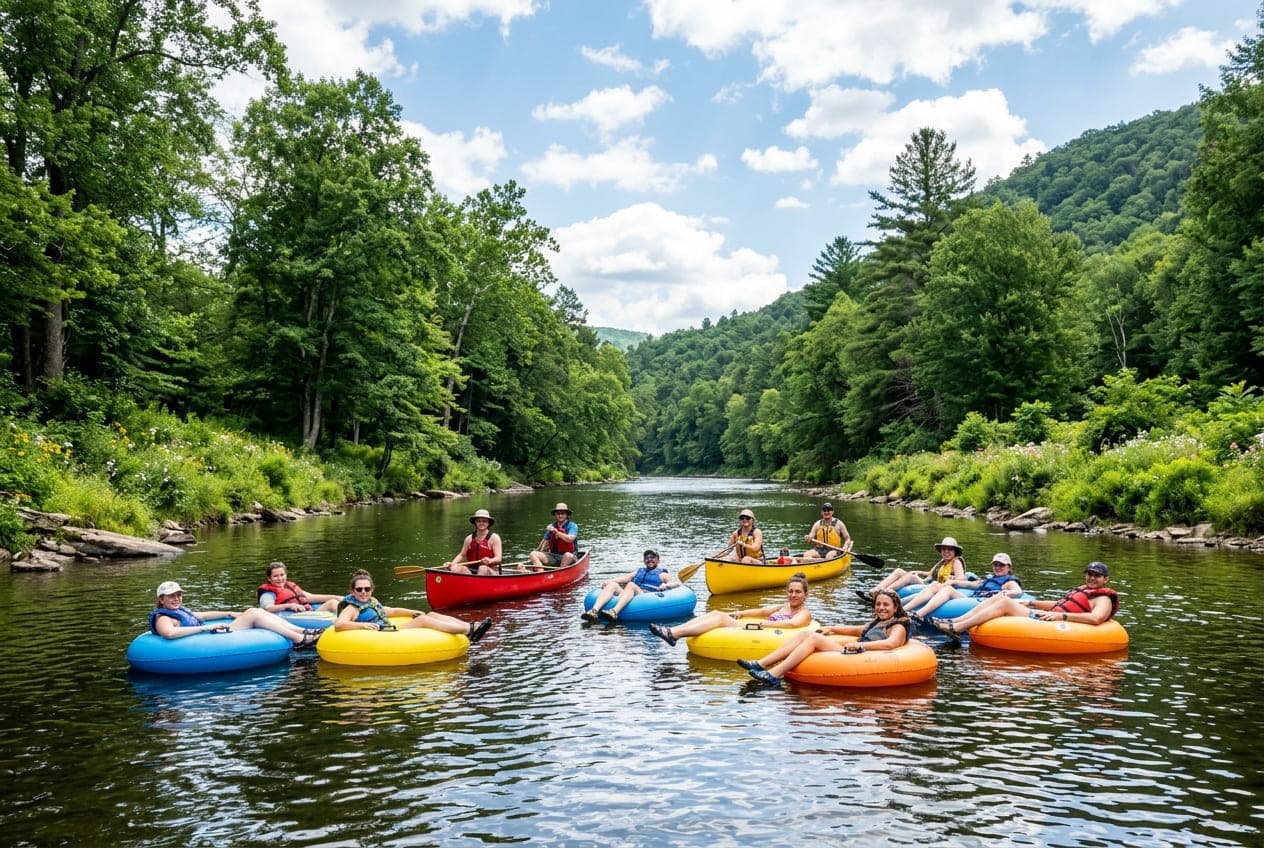
Paddling an open canoe down a winding river is one of North America's oldest and most rewarding outdoor pastimes. Whether you are running a day float down the Buffalo National River in Arkansas, tracing the historic fur-trade routes of Minnesota's Boundary Waters, or exploring the French Broad in North Carolina, a canoe offers unmatched cargo capacity, graceful glide, and peaceful immersion in nature.
However, moving current demands respect. Unlike modern closed-deck whitewater kayaks or self-bailing inflatable rafts, a traditional open canoe has zero deck enclosure, rigid hard-chine or rounded hulls, and an open gunwale that can take on hundreds of gallons of water in seconds.
When water levels fluctuate, the margin between a serene weekend float and a catastrophic pinned canoe narrows rapidly. Here is a comprehensive guide to understanding river flow rates (CFS) for canoeing, reading moving water, preventing swamping, and knowing when to portage.
How Flow Rates (CFS) Dictate Canoe Performance
Before securing your boat to the roof rack, checking the live river flow rate in cubic feet per second (CFS) on the nearest river gauge is mandatory.
Because canoes carry significant weight—especially when loaded with two adults, coolers, and multi-day camping dry boxes—draft depth and turning responsiveness change dramatically depending on the river volume:
| Flow Category | River Characteristics | Canoeing Feasibility & Handling |
|---|---|---|
| Low / Scrapey (< 200 CFS on small streams) | Widespread exposed gravel bars; water under 10 inches deep in riffles; channels braided. | High Drag & Portaging: Constant bottom scraping, hull abrasion, and getting hung up on shallow shoals. Frequent need to step out and drag your loaded canoe. |
| Optimal Touring (200 – 800 CFS) | Deep, well-defined green channels; clean 2–3 mph current; gentle riffles and easy eddy lines. | Prime Recreational Sweet Spot: Hull floats freely above submerged gravel beds. Eddies are forgiving, and turns are predictable for both beginners and tandem partners. |
| Fast-Moving / Pushy (800 – 2,500 CFS) | Wide, surging water; visible boil lines; current pushes hard against outside river bends; standing waves exceed 1.5 feet. | Intermediate / High Alert: Fast reaction times required. Missing an eddy or misjudging a downstream turn can force your canoe into overhanging riverbank sweepers or bridge piers. |
| High Water / Flood (> 2,500+ CFS or Action Stage) | Muddy, brown water carrying debris and logs; river breaches wooded banks; standing waves swamp open hulls. | Extremely Dangerous: Never launch an open canoe. If an open hull flips or swamps in this volume, thousands of pounds of hydraulic pressure will wrap the boat around the first rock or pier it hits. |
Note: CFS numbers vary drastically by river width and gradient. Always compare current discharge to the river's historical percentiles on ClearGauge.
The Danger of Swamping: Understanding Open Gunwales and Freeboard
The single most defining physical attribute of a canoe is its open gunwale.
When empty, a standard 16-foot tandem canoe might sit with 12 to 14 inches of freeboard (the vertical distance between the waterline and the top rim of the boat). But when you load 450 pounds of paddlers and 150 pounds of camping gear:
- Freeboard drops to just 6 or 7 inches.
- If standing waves in a rapid reach 1.5 to 2 feet in height, wave crests spill directly over the bow and gunwales.
- The Runaway Momentum of Water: Water weighs 8.34 pounds per gallon. Allowing just 30 gallons of river water into the bottom of your canoe adds over 250 pounds of free-sloshing ballast.
- This sloshing water eliminates primary stability (the "free surface effect"). When you attempt to lean or initiate a turn, the trapped water rushes to the low side, instantly capsizing the boat.
Swamping Prevention Strategies
- Install End Flotation Bags: Nylon or vinyl air bags tied into the extreme bow and stern voids prevent a swamped canoe from sinking below the gunwales, making rescue possible.
- Keep Weights Low and Centered: Pack heavy dry bags, water jugs, and coolers directly along the centerline on the floor of the hull, never perched on top of thwarts or seats.
- Carry a High-Volume Bailer and Sponge: A cut-off plastic milk jug secured with a tether to a thwart allows rapid bailing if splash water enters your boat in chop.
The Downstream Lean: How to Avoid Broaching
The most common way paddlers flip a canoe in moving water is by reacting instinctively in the wrong direction during an obstacle collision.
When a canoe drifts sideways and strikes a submerged boulder, gravel bar, or log:
- The Fatal Mistake: The paddler naturally wants to lean away from the scary rock toward the open, clear water upstream.
- What Happens: Leaning upstream dips the upstream gunwale closer to the rushing river. The oncoming current grabs the lowered rim, rushes inside the hull, and rolls the canoe upside down in less than two seconds.
- The Golden Rule: Always lean INTO the obstacle. If your canoe makes contact with a rock or bridge pier, throw your weight and hands directly toward the obstacle. This lifts the upstream gunwale high above the charging current, allowing water to slip harmlessly underneath the curved bottom of the hull while you push off.
Reading River Features in a Canoe
Unlike rafters who can punch through standing hydraulics, canoeists must navigate rivers by threading channels and avoiding obstacles altogether.
1. Upstream "V" vs. Downstream "V"
- Upstream Pointing "V" (Hazard): When water strikes a submerged rock or ledge, it splits and forms a "V" shape that points upstream toward you. This is an obstacle warning—steer clear of the point of the V!
- Downstream Pointing "V" (The Tongue): When water flows smoothly between two submerged obstacles or gravel bars, it converges into a smooth, dark green chute that points downstream. Aim your bow directly down the center of the downstream V for the deepest, safest passage.
2. Outside Bends and Riverbank Sweepers
In any river bend, the fastest and deepest water naturally cuts toward the outside bank (centrifugal force). Unfortunately, this is also where riverbanks erode, causing trees to collapse into the current.
- A fallen tree with water rushing through its branches is called a strainer—one of the most lethal hazards in river sports.
- Because canoes have long, stiff waterlines that track straight, initiate turns early. Begin back-ferrying or drawing toward the inside gravel bar well before the bend sweeps you toward overhanging roots.
Tandem Communication: Bow vs. Stern Roles
Successful tandem canoeing in moving water requires clear, non-verbal synchrony between partners:
- The Bow Paddler (The Eyes):
- Has an unobstructed view of shallow boulders, submerged deadfalls, and oncoming riffles.
- Responsible for calling out hazards early ("Rock left!", "Shallow shelf right!").
- Uses the cross-bow draw stroke to pull the front of the boat rapidly across the current without spinning the hull.
- The Stern Paddler (The Motor and Rudder):
- Controls the canoe's overall trajectory and forward momentum.
- Matches the bow paddler's line and executes pry strokes or J-strokes to keep the hull aligned with downstream currents.
- When approaching a technical riffle, the stern paddler must ensure the canoe enters straight; entering a wave train at a 45-degree angle guarantees a capsize.
When to Portage: The Smart Decision
Never let pride or fatigue dictate whether you run a sketchy rapid in an open boat. If any of the following conditions exist, secure the canoe to a shoreline eddy, scout from the bank, and execute a portage around the hazard:
- Blind Corners & Horizon Lines: If you hear roaring water and the river appears to vanish over a straight horizon line, pull over immediately. It may be a man-made low-head dam or an impassable ledge drop.
- Channel-Wide Wood: If timber or fallen trees span more than 60% of the active channel, portage your boat along the bank.
- Class III Rapids in Unmodified Canoes: Without spray decks, thigh straps, and full foam flotation, open tandem canoes are not designed for true Class III whitewater.
Check Conditions Before Launching
Before you strap your canoe to the vehicle, spend two minutes reviewing the data.
Check your local river's real-time flow and stage levels on ClearGauge to confirm that CFS levels are stable, falling, or within prime recreational limits. A peaceful day on the river starts with reliable hydrological data!
Want to see this in action? Check real-time river conditions near you.
Explore All Rivers →