
Selecting the Right River Flow for Your Kayak Skill Level
How to evaluate whether river flows match your paddling ability, recognizing the difference between technical low flows and high-volume pushy water.
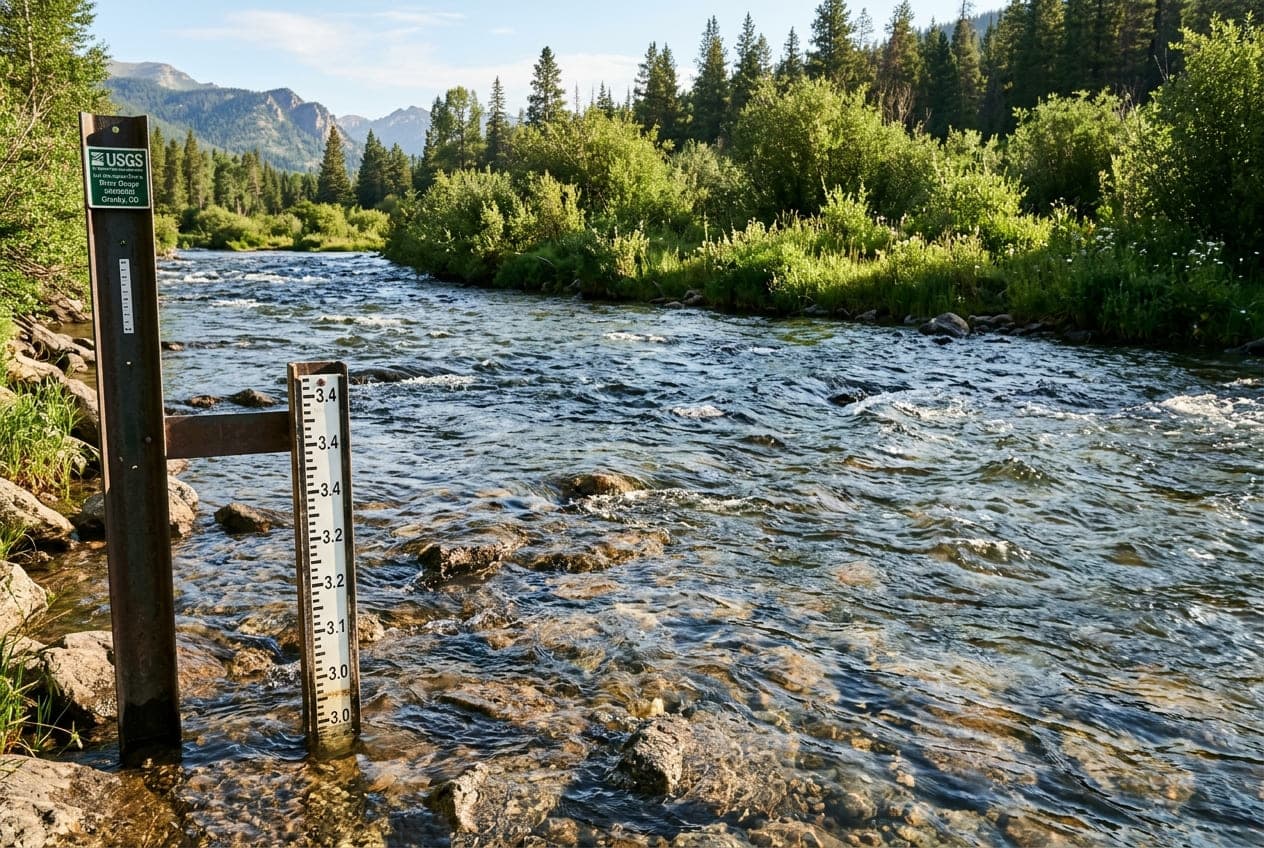
One of the biggest mistakes novice and intermediate paddlers make is treating a river's whitewater classification as a static rating.
A river described as "Class II-III" in a guidebook might offer an easy, forgiving float at 500 CFS. But that exact same stretch at 3,500 CFS can transform into a high-consequence, pushy Class IV run with violent whirlpools and washed-out eddies.
River difficulty is never static; it is a direct function of flow volume (CFS). Here is how to evaluate flow rates against your paddling skills.
The Spectrum of River Flow Characteristics
When reading streamflow gauges for paddling trips, rivers generally fall into three operational flow brackets:
1. Low Flow (Technical and Bony)
- What It Feels Like: Water levels are below median percentiles. Boulders and gravel bars are exposed, dividing the river into multiple shallow channels.
- Physical Demands: Requires precise boat control, quick turning, side-slipping, and reading subtle shallow water cues (sleeves and "V" channels).
- Primary Hazards: Scraping hulls on rocks, getting pinned on shallow ledges, or having to walk your boat through shallows. Current velocity is slow, making swimming or self-rescue straightforward.
- Best For: Beginners practicing eddy turns, packrafters with durable inflatable hulls, and technical creek boaters.
2. Optimal Medium Flow (The Sweet Spot)
- What It Feels Like: Water covers most riverbed rocks with sufficient cushioning. Rapids feature clean wave trains, distinct eddies with soft boundary lines, and predictable channels.
- Physical Demands: Standard paddling strokes, effective bracing, and good situational awareness.
- Primary Hazards: Standard whitewater features (standing waves, small holes, eddy lines).
- Best For: Most recreational kayakers, canoeists, and commercial raft trips.
3. High Volume (Pushy and Continuous)
- What It Feels Like: Water volume drowns out individual boulder gardens, replacing them with massive continuous wave trains, large surging boil lines, and powerful hydraulic holes.
- Physical Demands: Aggressive forward momentum, reliable combat roll, strong cardiovascular fitness, and swift ferry angles.
- Primary Hazards:
- Fewer Eddies: Shoreline eddies wash out or become turbulent boils, eliminating rest stops.
- Cold Water & Swimming Distance: If you capsize and wet-exit, you may swim for hundreds of yards before finding a calm eddy or bank.
- Strainers and Floating Logs: High water submerges trees and debris, creating high-consequence entrapment hazards.
- Best For: Experienced paddlers with dialed roll skills and full whitewater safety teams.
Four-Step Checklist for Choosing Safe Flows
Step 1: Check the Guidebook Minimum and Maximum Thresholds
Most established whitewater rivers have documented minimum, recommended, and maximum runnable flows published by organizations like American Whitewater (AW). Never launch if current USGS gauge readings exceed the recommended maximum for your skill tier.
Step 2: Analyze the 24-Hour Trend
Is the river rising, holding, or falling?
- Rising River: High caution. A river that is rising fast can jump several hundred CFS while you are midway through your run, turning a manageable trip into an emergency.
- Falling or Stable River: Much safer. Hydrology is predictable, and obstacles are not dynamically changing as you paddle.
Step 3: Assess Your Group's "Weakest Link"
A paddle group is only as safe as its least experienced member. If two paddlers in your group have a reliable kayak roll in Class IV, but two others are still learning their wet-exit recoveries on Class II, you must plan your flow window around the Class II paddlers.
Step 4: Scout Whenever in Doubt
If you arrive at the river and the water looks brown, boils aggressively along the banks, or carries floating debris, trust your instincts. Portaging around a rapid or calling the trip off is always the sign of a smart, seasoned river runner.
Recommended Flotation: PFDs for Moving Water
No matter what flow tier you choose, a properly fitted Coast Guard-approved Type III paddle vest is mandatory. Water volume and hydraulics demand high mobility and reliable buoyancy:
Want to see this in action? Check real-time river conditions near you.
Explore All Rivers →