
Low-Head Dams Explained: Why 'Drowning Machines' Are the Most Deceptive River Hazard
Understand how low-head dams create inescapable hydraulic boils, why life jackets fail in aerated foam, how to spot them upstream, and self-rescue techniques.
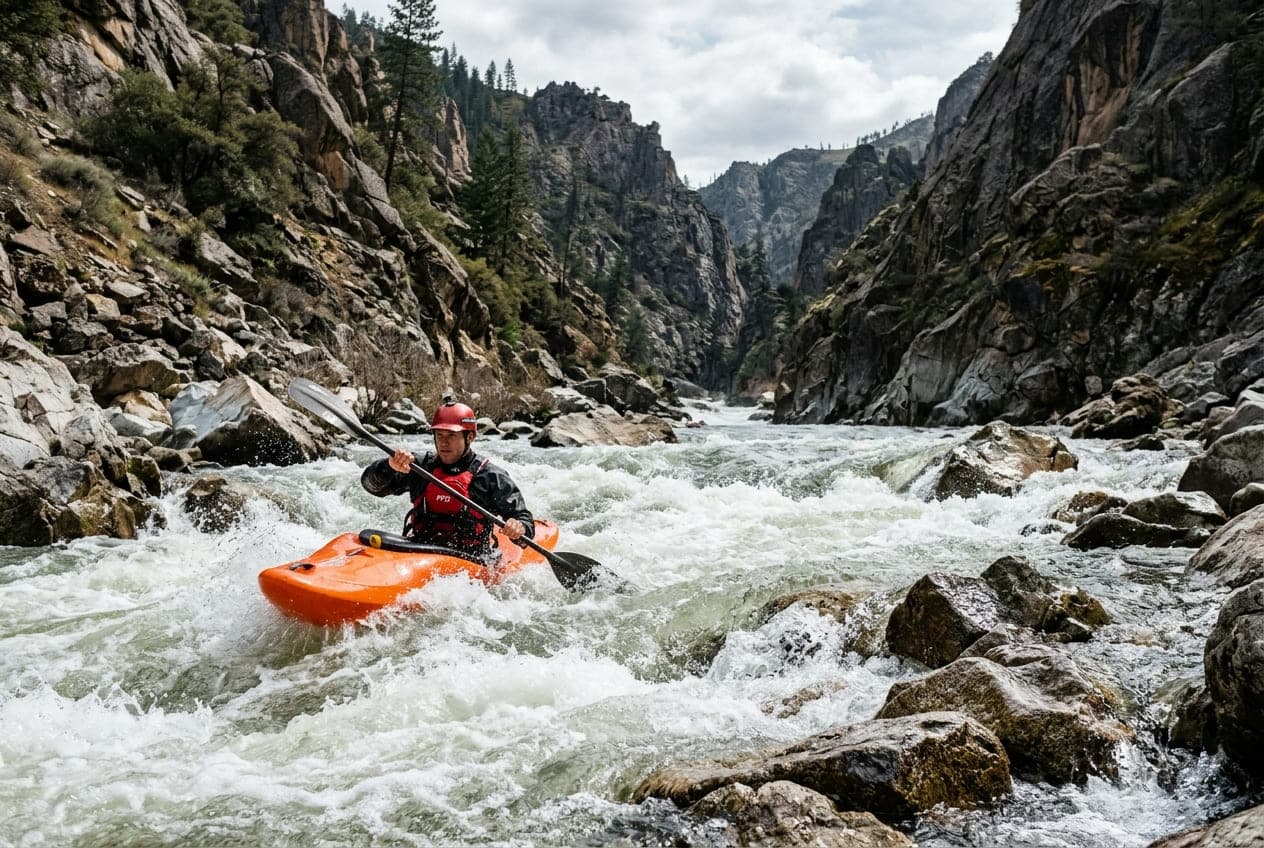
Among whitewater paddlers, flatwater canoeists, and rescue technicians, there is one man-made river feature that commands universal dread: the low-head dam.
Often referred to by hydrologists, first responders, and the National Weather Service as "drowning machines," low-head dams are responsible for hundreds of river fatalities across North America. Tragically, a large percentage of those victims are would-be rescuers who stepped in to help someone else.
Understanding why these structures are so lethal, how to recognize them from an approaching boat, and what to do if you ever encounter one is essential knowledge for anyone who steps foot on moving water.
What is a Low-Head Dam?
A low-head dam (sometimes called a weir, run-of-the-river dam, or mill dam) is a man-made structure built entirely across a river channel, designed to allow water to flow freely and uniformly across its entire crest.
Unlike massive hydroelectric dams that tower hundreds of feet in the air, a low-head dam may have a drop of only 2 to 10 feet.
Many were built in the 19th and early 20th centuries to power gristmills, divert irrigation canals, or maintain municipal municipal water intake pools. Today, thousands of these aging structures remain on rivers throughout suburban and rural waterways, often completely unmaintained and unmarked by signs or safety buoys.
Why They Are Called "Drowning Machines": The Physics of the Trap
To a casual observer on the riverbank, a 4-foot drop over a concrete weir looks relatively benign—perhaps even like a fun little rapid. But beneath that smooth pour-over lies a hydrodynamic trap that defies normal swimming instincts.
1. The Recirculating Hydraulic (The "Backroller")
When water spills over the crest of a low-head dam, it plunges downward into the riverbed. As it hits bottom, it divides:
- Some water pushes downstream along the riverbed.
- A massive volume of water curls back toward the surface and circulates directly back upstream into the face of the dam.
This creates a continuous, high-speed rotating cylinder of water known as a keeper hydraulic or recirculating backroller.
If a kayaker, canoe, swimmer, or piece of debris goes over the dam:
- The plunging water forces the victim deep underwater.
- The bottom current pushes them slightly forward toward the "boil line" (the point downstream where water bubbles up).
- The surface backroller immediately grabs the victim and drags them right back into the wall of the dam.
- The cycle repeats continuously, tumbling the victim like clothes in a washing machine.
2. The Aeration Trap: Why PFDs (Life Jackets) Fail
One of the most terrifying characteristics of a low-head dam hydraulic is aeration.
Water churning below the plunge pool is infused with millions of microscopic air bubbles, reducing the water density by 30% to 50%.
Water density is what makes boats float and life jackets work. In aerated white foam:
- Life jackets lose their buoyant lift. A standard US Coast Guard-approved Type III PFD providing 15.5 lbs of flotation may struggle to keep a swimmer's head above the frothy surface.
- Kayaks and canoes sink or spin vertically. Boats do not float on foam; they fill with aerated water, pin against the dam face, or pitch-pole uncontrollably.
- Swimming is impossible. Kicking or stroking against aerated foam yields almost zero forward propulsion—it is like trying to swim through shaving cream.
3. The Uniformity Problem
In a natural river rapid, a hydraulic hole usually has an "exit route." Natural riverbeds have irregular boulders, side-eddies, and breaks in the current where a swimmer can be flushed out to safety.
A low-head dam, however, is perfectly engineered and uniformly horizontal. There are no natural breaks, no eddy pockets, and no weak spots. The recirculating keeper runs from riverbank to riverbank with identical strength across the entire width of the river.
How to Spot a Low-Head Dam From Upstream
The greatest danger of a low-head dam is that it is virtually invisible from upstream.
Because the dam is submerged or sits low to the water level, an approaching paddler looking downstream does not see a wall. Instead, the river simply appears flat until you are directly on top of the drop.
Watch for these four telltale warning signs:
- The "Horizon Line": If the river ahead suddenly looks like it drops off into an abrupt horizontal line where you can only see treetops or distant banks beyond it, treat it immediately as a major hazard.
- A Line of White Foam: A straight, unbroken horizontal band of white foam stretching from shore to shore is almost always a dam or man-made weir.
- Sound Without Visibility: If you hear a deep, continuous, mechanical roaring sound, but the water in front of you looks completely smooth and calm, you are approaching a pour-over.
- Concrete Abutments on the Shoreline: Look closely at the riverbanks. If you see vertical concrete retaining walls, stone masonry, metal pylons, or old mill intake structures, assume a low-head dam spans between them.
Safe River Protocol: The Golden Rules
Rule 1: Always Scout Unfamiliar Waterways
Before launching your kayak, canoe, or tube on any new stretch of water:
- Check detailed satellite maps and local river trail guides.
- Review our live river guides and gauge readings to see the current flow conditions.
- Identify all dams, bridges, and portage locations before you leave your driveway.
Rule 2: Portage Far Upstream
If you know or suspect a low-head dam is ahead, exit the river well before the structure.
Do not wait until you are 50 feet away. The water directly above a dam accelerates into an "upstream drawdown zone" where the current quickens and pulls steadily toward the crest.
- Pull ashore at least 200 to 300 feet upstream.
- Carry your boat around the dam on the bank.
- Re-enter the river well downstream—at least 100 feet past the boil line—to ensure you are completely clear of the upstream backwash.
What to Do If Trapped (Self-Rescue Principles)
If you are ever swept over a low-head dam and find yourself trapped in the hydraulic boil, your natural instinct will be to fight for the surface and gasp for air. Unfortunately, swimming against the surface backwash will exhaust you in seconds.
Rescue professionals teach these counter-intuitive survival techniques:
- Tuck and Ball Up: Bring your knees to your chest, wrap your arms around your legs, and protect your head. Tucking reduces your surface area, allowing the hydraulic to tumble you rather than ripping your limbs.
- Dive for the Bottom: The surface current moves backward into the dam, but the water along the riverbed flows downstream. If you can orient yourself, point your head down and swim hard toward the riverbed. If you can get beneath the boil, the bottom current can flush you downstream away from the dam.
- Work Toward the Banks: If the dam has concrete side abutments, the hydraulic sometimes has slight pressure differentials near the corners. Try to work your way laterally toward the shoreline rather than fighting upstream or downstream.
A Warning for Bystanders: Do Not Jump In
If you witness a person or dog trapped in the hydraulic of a low-head dam from shore:
CRITICAL WARNING: NEVER jump into the water to rescue someone. Countless tragic reports document firefighters, police officers, and well-meaning friends drowning within seconds of entering the boil. You will not overpower the hydraulic; you will simply add a second victim.
Instead, follow the standard swiftwater rescue progression: Talk, Reach, Throw, Row, Go.
- Call 911 immediately and request a specialized swiftwater rescue team.
- Throw from Shore: Throw a rescue throw-bag, a life ring, a long tree branch, or a rope tied to a cooler or spare life jacket.
- Do Not Tie the Rope to Yourself: Never tie the rescue rope around your own body. If the trapped person or boat grabs the line, the hydraulic force will pull you directly into the boil with them. Anchor the rope around a solid tree or hold it with multiple people on dry land.
Final Thoughts: Respect the River
Rivers provide incredible recreation, from peaceful afternoon floats to world-class whitewater adventures. But man-made low-head dams are industrial relics that turn peaceful rivers into lethal traps.
Keep your eyes on the horizon line, check gauge heights and flow rates before every trip, and always carry a properly fitted USCG-approved life jacket whenever you're on the water.
Want to see this in action? Check real-time river conditions near you.
Explore All Rivers →