
Dissolved Oxygen in Rivers: How Streamflow, Temperature & Riffles Dictate Aquatic Life
Learn how dissolved oxygen (DO) levels fluctuate in rivers, why riffles act as natural aerators, and how low flow and warm water trigger fish mortality.
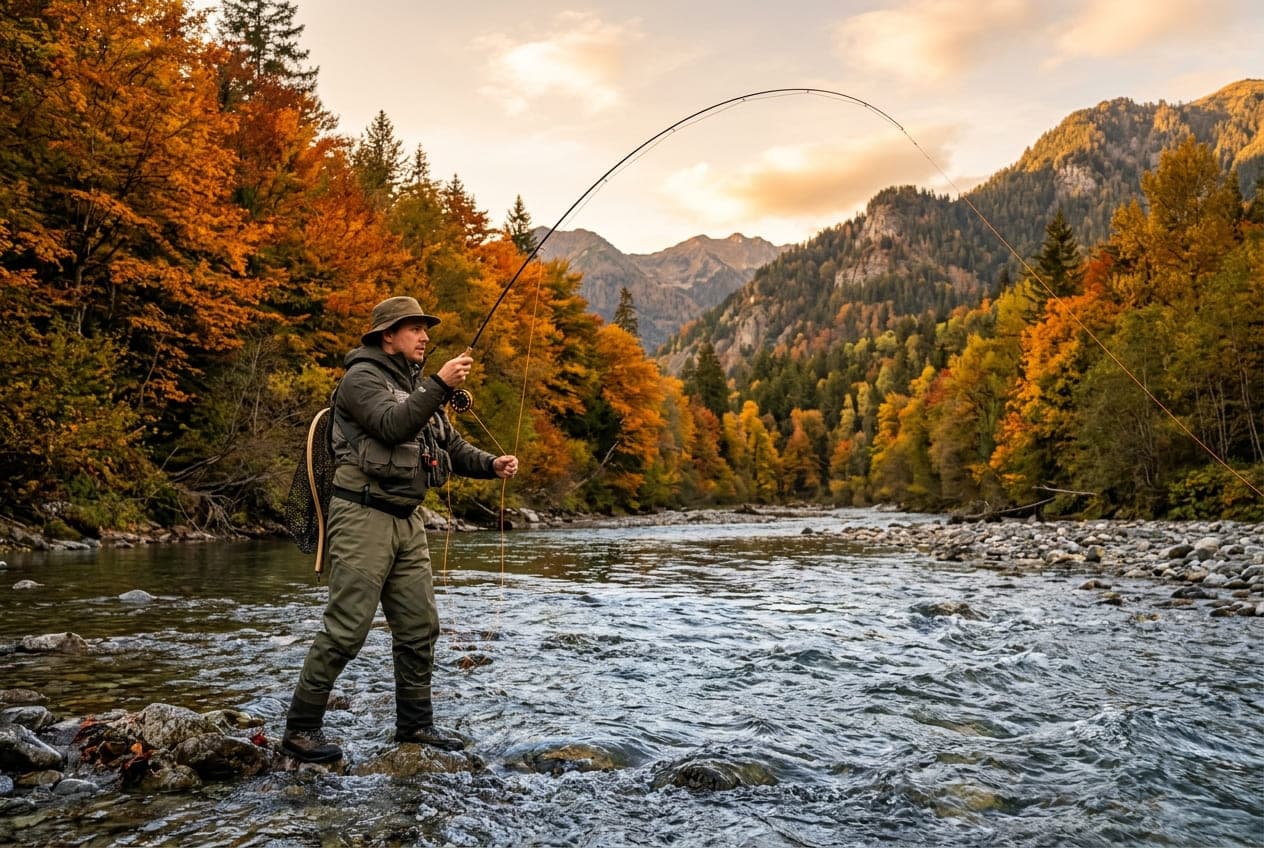
Every dedicated angler knows to check water temperature and streamflow (CFS) before heading out. But beneath the surface lies an invisible chemical metric that dictates where fish feed, when they become lethargic, and whether they can survive being hooked and released: Dissolved Oxygen (DO).
Unlike terrestrial animals surrounded by an endless supply of 21% atmospheric oxygen, river fish must extract microscopic oxygen gas molecules suspended between liquid water molecules through their delicate gill lamellae. In a river ecosystem, dissolved oxygen is constantly shifting—governed by turbulence, water temperature, aquatic plant photosynthesis, and dam release schedules.
Understanding how river hydrology shapes dissolved oxygen will transform your ability to locate active fish and practice responsible catch-and-release conservation.
What is Dissolved Oxygen (DO)?
Dissolved oxygen refers to the concentration of free, non-compound oxygen molecules ($O_2$) present in water. It is typically expressed in two ways:
- Milligrams per Liter (mg/L) or Parts per Million (ppm): The actual mass of oxygen dissolved in a volume of water. In freshwater streams, healthy readings typically range between 7.0 mg/L and 12.0 mg/L.
- Percent Saturation (% Sat): The percentage of dissolved oxygen relative to the maximum theoretical amount the water could hold at that specific temperature and barometric pressure. Normal river water ranges from 80% to 110% saturation (water tumbling over waterfalls can become temporarily supersaturated).
The Henry's Law Principle: Temperature vs. Oxygen Capacity
The single most fundamental law of river chemistry is: Cold water holds physically more dissolved oxygen than warm water.
As water temperature increases:
- Kinetic energy causes water molecules to vibrate more rapidly.
- This molecular agitation forces gaseous oxygen molecules out of solution and back into the atmosphere (the same reason warm soda loses its carbonation much faster than cold soda).
- At 40°F (4.4°C), pure water at sea level can hold up to 13.1 mg/L of dissolved oxygen at 100% saturation.
- At 70°F (21.1°C), maximum oxygen solubility plunges to just 8.9 mg/L.
- Above 75°F (23.9°C), solubility drops below 8.3 mg/L—pushing coldwater species into acute physiological distress.
 Water Temp (°F)    Max DO at 100% Saturation (mg/L)
 ──────────────────────────────────────────────────
 35°F               14.0 mg/L   ████████████████████ (Optimal Coldwater)
 50°F               11.3 mg/L   ████████████████
 65°F                9.5 mg/L   ████████████
 75°F                8.3 mg/L   █████████ (Trout Stress Threshold)
 85°F                7.3 mg/L   ███████   (Lethal for Salmonids)
Physical Aeration: Why Riffles and Pocket Water Matter
Rivers do not absorb oxygen evenly across their surface. The primary engine of oxygen replenishment in freestone streams is hydraulic turbulence:
The Physics of Aeration
- In flat, glassy pools or slow-moving glides, the air-water interface is minimal. Oxygen diffusion from the atmosphere into the water is slow and restricted to the top few millimeters.
- In shallow, rocky riffles, pocket water, and plunge pools, water collides with boulders and gravel shelves. This churns the surface, breaks laminar flow, and entrains thousands of tiny air bubbles deep into the current.
- The massive surface-area-to-volume ratio of micro-bubbles creates rapid gas transfer, replenishing oxygen reserves depleted by organic decomposition downstream.
Angler Pro Tip: During hot midsummer afternoons when main-river temperatures creep upward and deep pools stagnate, trout and smallmouth bass leave their slow winter holding lies and crowd into the fastest, white-capped water at the very heads of riffles and cascading chutes. They aren't just looking for food—they are desperate for the oxygen concentrated in turbulent water.
The Diurnal Oxygen Cycle: Plants, Sunlight, and Nighttime Dips
One of the greatest surprises for many anglers is that dissolved oxygen reaches its daily lowest point right at sunrise, not during the hottest part of the afternoon.
This is caused by the diurnal photosynthesis-respiration cycle:
- Daytime (Sunlight): Submerged aquatic vegetation (like Elodea, mosses, and algae) undergoes photosynthesis. They absorb dissolved carbon dioxide and pump massive amounts of pure oxygen into the river, creating peak DO levels between 2:00 PM and 5:00 PM.
- Nighttime (Darkness): As soon as the sun sets, photosynthesis ceases. However, plant respiration continues: every weed bed, aquatic insect, and decomposing bacterium on the riverbed consumes oxygen all night long.
- The Dawn Crash: By 5:00 AM to 7:00 AM, accumulated overnight respiration has depleted oxygen reserves to the daily low point. In rivers with heavy weed growth and low summer flows, dawn can trigger severe oxygen drops.
Fish Species Tolerances: The Biological Impact
Different fish species have evolved vastly different respiratory thresholds:
| Fish Species | Ideal DO Range (mg/L) | Stress Threshold (mg/L) | Lethal Threshold (mg/L) |
|---|---|---|---|
| Brook & Cutthroat Trout | 9.0 – 12.0 mg/L | < 7.0 mg/L | < 5.0 mg/L |
| Brown & Rainbow Trout | 8.0 – 11.0 mg/L | < 6.5 mg/L | < 4.5 mg/L |
| Smallmouth & Largemouth Bass | 6.0 – 9.0 mg/L | < 4.5 mg/L | < 2.5 mg/L |
| Carp, Catfish & Bowfin | 4.0 – 8.0 mg/L | < 2.5 mg/L | < 1.0 mg/L |
When dissolved oxygen falls below a trout's stress threshold:
- Respiration rates quadruple (fish flare their gill covers constantly while resting on the riverbed).
- Feeding ceases as digestion requires metabolic oxygen the fish cannot spare.
- If an angler hooks a trout in low-DO conditions, the anaerobic exertion floods the fish's muscular tissues with lactic acid. In high-oxygen cold water, the fish recovers within 15 minutes. In low-oxygen warm water, the fish cannot clear the lactic acid from its bloodstream and will die of delayed exhaustion hours after being released.
Dam Releases: The Tailwater Hypolimnion Effect
Anglers often assume tailwaters (rivers fed by deep dam reservoirs) always enjoy pristine water quality. However, dissolved oxygen in tailwaters depends heavily on the dam's intake depth:
- Hypolimnetic Bottom Releases: Dams that draw water from the bottom of deep reservoirs release ice-cold water year-round. However, during late summer, the stagnant bottom layer of a deep reservoir (the hypolimnion) can become anoxic (zero oxygen) as dying algae settles and rots on the lake floor.
- If a dam discharges this anoxic water without spillway aeration, the river directly below the dam outlet can have frigid 48°F water that paradoxically contains dangerously low dissolved oxygen!
- Fortunately, modern hydroelectric facilities often install aerating turbine vents or small weir baffles downstream to re-oxygenate the water before it reaches recreation corridors.
Monitor Water Trends on ClearGauge
Next time you plan a fishing float or wading trip, look beyond just water height.
Check live flow rates, percentiles, and seasonal patterns on ClearGauge to identify healthy flow volumes and locate cold, aerated waters where fish are thriving.
Want to see this in action? Check real-time river conditions near you.
Explore All Rivers →