
The Hoot Owl Rule Explained: Water Temperature, Drought, and Summer River Closures
Why do fisheries agencies enforce hoot owl restrictions? Learn the science of water temperature, dissolved oxygen, trout stress, and ethical summer fishing rules.
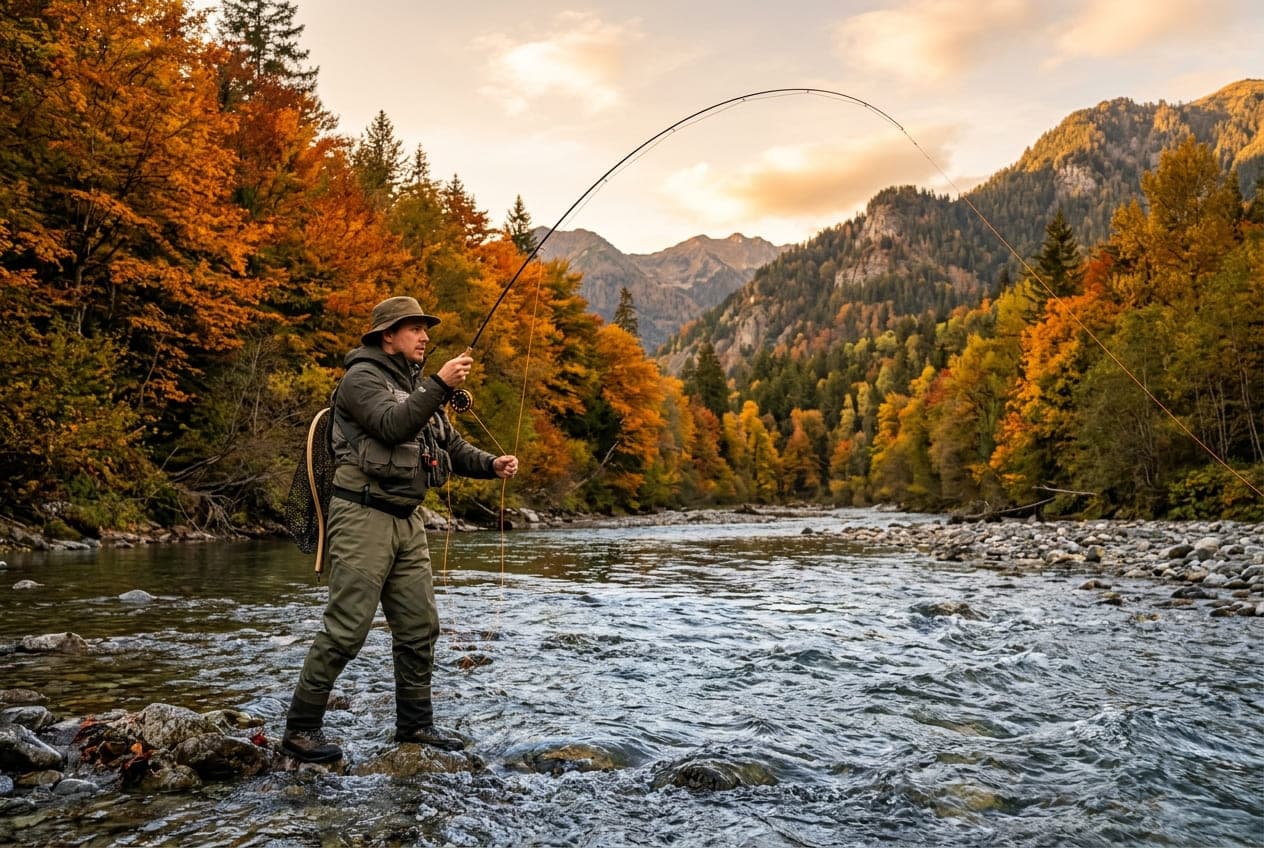
Every summer across the American West—from the Madison and Yellowstone in Montana to the Colorado, Roaring Fork, and South Platte—anglers encounter a regulation known colloquially as the "Hoot Owl" rule.
If you are planning a trip or monitoring river conditions, understanding what a hoot owl closure is, why it exists, and how water temperatures correlate directly with river flows (CFS) is essential for both catching fish and protecting wild fisheries.
What is a Hoot Owl Restriction?
A Hoot Owl restriction is a mandatory emergency conservation rule enacted by state wildlife agencies (such as Montana Fish, Wildlife & Parks or Colorado Parks and Wildlife) that prohibits fishing daily between 2:00 PM and midnight on designated river sections.
Under this rule, anglers are allowed to fish from midnight until 2:00 PM, but must completely reel in and be off the water during the heat of the afternoon and evening.
Why is it Called "Hoot Owl"?
The phrase comes from early 20th-century logging in the Pacific Northwest. When summer droughts created extreme wildfire risk and oppressive heat, timber companies shifted work shifts to the pre-dawn hours—when the hoot owls were still calling in the dark—so loggers could finish their workday before the afternoon heat sparked fires. Fisheries managers adopted the term to describe fishing during the cool early morning hours.
The Biology: Water Temperature vs. Dissolved Oxygen
The reason agencies enforce hoot owl closures is rooted in freshwater physiology and atmospheric chemistry.
Trout—including Rainbow, Brown, Cutthroat, and Brook trout—are cold-water obligates. Their bodies are built for water that is cold, crisp, and rich in dissolved gases.
1. The Dissolved Oxygen Crash
Cold water naturally holds more dissolved oxygen (DO) than warm water. As water warms up:
- At 50°F (10°C), water can hold roughly 11.3 mg/L of dissolved oxygen.
- At 68°F (20°C), oxygen carrying capacity drops to roughly 9.1 mg/L.
- At 75°F (24°C), oxygen levels plunge below 8.2 mg/L, and in slow-moving water, it can drop much further.
2. Metabolic Spike in Trout
Fish are poikilothermic (cold-blooded). Their internal body temperature matches the ambient water temperature.
When a river warms up, a trout's metabolism accelerates dramatically. Its heart beats faster, its tissues demand more oxygen, and its baseline energy expenditure skyrockets.
This creates a deadly biological mismatch: the trout needs significantly more oxygen just to stay alive at the exact time the water contains significantly less oxygen.
3. Exhaustion and Delayed Mortality
When an angler hooks a trout in 55°F water, the fish fights, builds up lactic acid in its muscle tissues, and recovers quickly once released.
However, in water above 68°F–70°F, fighting an angler pushes the trout past its aerobic threshold into extreme oxygen debt. Even if the trout swims away upright when released, studies show that delayed post-release mortality can exceed 40% to 60% within 24 to 72 hours. The fish simply cannot clear the systemic lactic acid from its bloodstream in oxygen-deprived water.
What Triggers an Official Hoot Owl Closure?
State biologists monitor live USGS streamgages equipped with continuous water temperature thermistors. While exact criteria vary slightly by state and watershed, standard triggers include:
| Regulation Stage | Typical Trigger Criteria | Action Taken |
|---|---|---|
| Voluntary Advisory | Water temps reach 66°F–68°F in late afternoon | Agencies ask anglers to carry thermometers and stop fishing when temps exceed 68°F. |
| Hoot Owl (Stage 1 Closure) | Water temps reach or exceed 73°F (22.8°C) for 3 consecutive days | Fishing prohibited daily from 2:00 PM to midnight. |
| Full 24-Hour Closure (Stage 2) | Water temperatures stay dangerously elevated, or flows fall below historic critical baseflows | Complete 24-hour closure to all fishing until flows rebound or fall cooling begins. |
| Native / Sensitive Waters | Streams harboring Bull Trout, Westslope Cutthroat, or Grayling | Hoot owl rules often trigger much sooner, frequently at 66°F for 3 consecutive days. |
How Streamflow (CFS) Dictates Water Temperature
River discharge (measured in Cubic Feet per Second) is the single biggest physical buffer against summer temperature spikes:
- Thermal Mass: A river flowing at 2,500 CFS has a massive volume of water. It takes hours of intense solar radiation to heat that volume up. Conversely, if drought drops that same river to 250 CFS, the shallow, slow-moving ribbon of water heats up rapidly under direct sunlight.
- Loss of Velocity: Lower CFS means slower current. Water spends more time in exposed, unshaded river sections soaking up atmospheric heat.
- Loss of Groundwater Inflow: In healthy spring and early summer conditions, cold sub-surface springs and snowmelt feed the riverbed. When river levels drop to extreme baseflow, the proportion of cold groundwater dilution drops compared to warm ambient surface runoff.
This is why checking both streamflow (CFS) and water temperature on your local river gauge is critical during July, August, and September.
The Ethical Angler’s Summer Checklist
Even if an official hoot owl restriction has not yet been declared by the state, responsible anglers self-regulate to protect wild fish populations:
- Carry a Stream Thermometer: Never guess water temperatures. Take a reading in moving water at knee depth around 1:00 PM. If the temperature reaches 68°F (20°C), pack up your gear for the day.
- Fish the Dawn Patrol: The lowest water temperatures of the 24-hour cycle occur between 6:00 AM and 10:00 AM, right after the cool night air has lowered river temps. The fishing is often significantly better during these morning hours anyway.
- Upsize Your Tippet: Put away the 6X and 7X ultra-fine leaders. Fish 3X or 4X tippet so you can land fish quickly without exhausting them.
- Keep Fish 100% Submerged: Skip the "hero shots" out of the water. An exhausted trout lifted into 85°F dry air suffers rapid gill damage. Unhook the fish underwater using forceps.
- Target Warm-Water Species: When trout streams overheat, pivot to smallmouth bass, largemouth bass, carp, or panfish. These species thrive in temperatures up to 80°F and provide explosive summer sport on the fly or light tackle.
- Head High or Seek Tailwaters: Head into alpine headwaters above 8,000 feet elevation where water stays in the 50s all summer, or fish deep bottom-release tailwaters that discharge 50°F reservoir water year-round.
Tracking Summer Conditions on ClearGauge
Before setting your alarm for a summer trip, look at the 7-day flow history chart on ClearGauge.
If you see a river's discharge steadily trending downward below its historical median alongside sustained sunny weather, anticipate thermal stress and plan your trip for the early morning hours.
Check your home waters on our live rivers dashboard to see current flow rates, percentiles, and trend indicators today.
Want to see this in action? Check real-time river conditions near you.
Explore All Rivers →