
Reading River Water Clarity for Fishing: Off-Color, Green Tea, and the Hydrograph Drop
Why trout feed aggressively when a blown-out river turns emerald green, how to read the four stages of water clarity, and how to time the falling hydrograph.
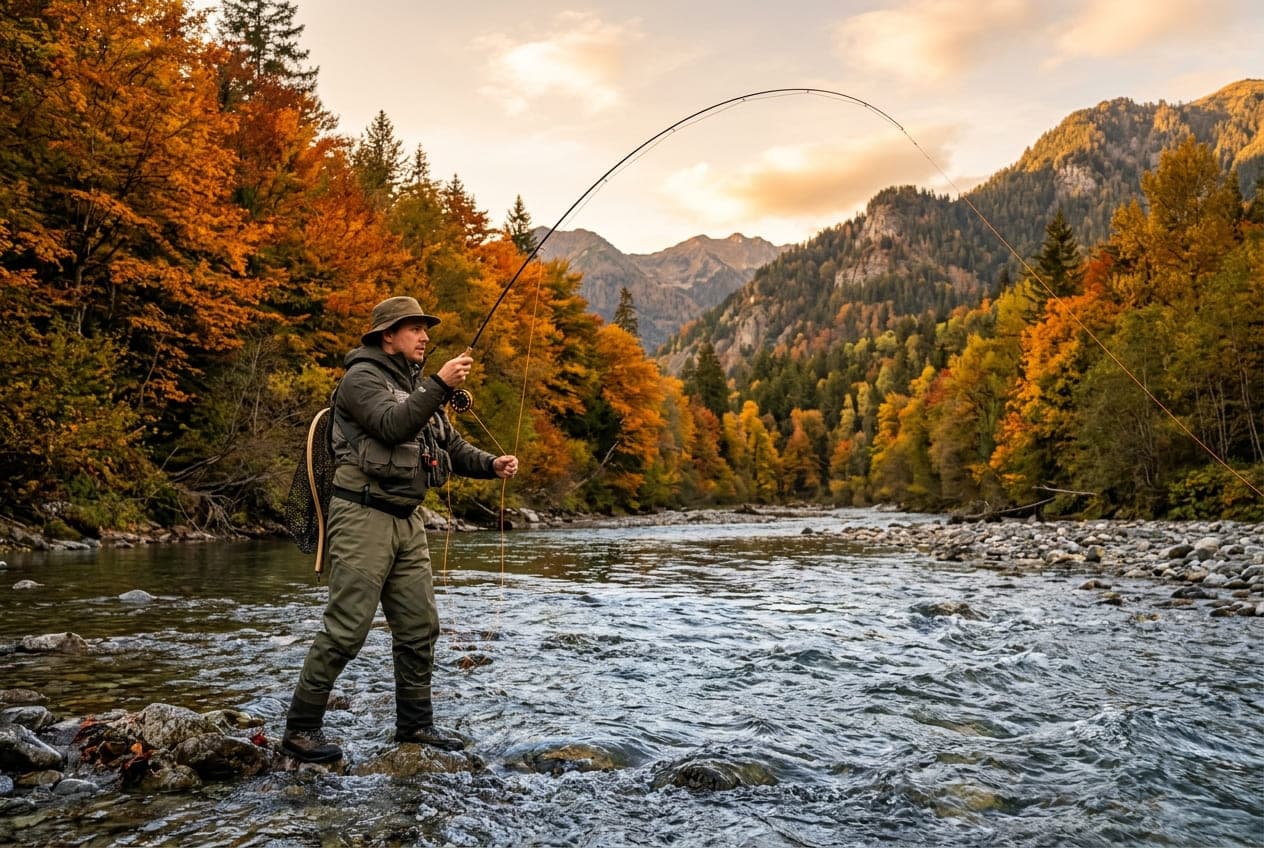
Every fly fisher has experienced the disappointment of pulling up to a favorite river only to find it running like chocolate milk after an overnight thunderstorm. The conventional wisdom says: the river is blown out; turn around and go home.
Experienced river anglers know better.
A high, off-color river is not a lost cause—it is a countdown clock. The moment that flood peak crests on the USGS gauge and starts its downward curve, a biological switch flips in the river.
Trout that spent days hunkered down behind boulders during the flood surge suddenly realize two things: food is washing through the current in unprecedented quantities, and the cloudy water protects them from ospreys, eagles, and anglers.
Timing that exact window—when a blown-out river clears into the legendary green tea stage—is the secret to catching the largest fish of the season.
The Four Stages of River Water Clarity
As suspended sediment drops out of moving water following a high-flow event, every freestone and tailwater river transitions through four distinct clarity stages:
| Stage | Visibility | Water Color | Fishing Verdict | Best Tactics |
|---|---|---|---|---|
| 1. Blown Out | Under 6 inches | Muddy chocolate brown | Do Not Fish. Floating debris, high danger. | Stay home or find an unblown spring creek. |
| 2. Heavy Off-Color | 6 to 18 inches | Milky tan / dirty olive | Marginal to Good. Fish tight to riverbanks. | Large black/copper streamers, worm patterns, heavy stoneflies. |
| 3. "Green Tea" | 2 to 4 feet | Emerald green / translucent | PRIME TIME. Peak aggressive predatory feeding. | Articulated streamers, rubber-leg nymphs, big caddis dries. |
| 4. Gin Clear | 6+ feet | Crystal clear | Technical & Spooky. Fish see your tippet and shadow. | Long leaders, 5X/6X tippet, micro-nymphs, cautious sight casting. |
Why the "Green Tea" Stage Produces Trophy Trout
When water clarity settles between two and four feet of visibility, conditions align in the angler's favor for three reasons:
1. Loss of Caution (The Predator Blanket)
In crystal-clear water, mature brown trout, wild rainbows, and smallmouth bass are hyper-alert. They hide under deep undercut banks and rarely venture into open riffles until dusk because overhead bird shadows trigger panic.
In translucent emerald-green water, trout feel completely invisible from above. Big fish move right out into shallow bank seams, tailouts, and mid-river gravel bars to hunt in broad daylight.
2. Silhouette and Contrast
When visibility is under six inches, fish cannot locate a fly in the turbid current. But at three feet of visibility, a dark olive or black streamer casts a crisp, high-contrast silhouette against the surface. Trout can track and strike a moving fly from several feet away.
3. The Food Conveyor Belt
A dropping flood leaves tons of aquatic insects—dislodged stoneflies, scuds, drowned worms, and disoriented sculpins—drifting along the river margins. Trout gorge themselves during the first 24 to 48 hours of clearing water before the food supply settles down.
The Hydrograph Inflection Point: When to Go
How do you know when a river has shifted from unfishable mud to emerald green without driving three hours to check the boat ramp?
You watch the shape of the USGS hydrograph curve on ClearGauge.
Rising Limb:   CFS spiking sharply   — Muddy, dirty, dangerous debris
The Peak:      Curve flattens out    — Sediment begins settling
Falling Limb:  CFS drops 10% to 20%  — "GREEN TEA" WINDOW OPENS
The Rule of the Falling Limb
- Never fish the rising limb: When the hydrograph line is shooting straight up, the river is picking up fresh topsoil from dry ravines. Water temperatures plummet, floating logs endanger wading anglers, and trout hug the streambed in survival mode.
- Watch for the flattening crest: When the 15-minute telemetry points stop climbing and plateau horizontally, the main flood wave has passed.
- Strike when the curve drops 10% to 15%: On most freestone rivers, once the flow drops roughly 15% below its peak, the heaviest gravel and sand have dropped out of suspension. The river begins taking on that distinct emerald-green hue. That is your cue to hit the water.
Gear and Rigging for Off-Color Water
When fishing clearing flows, your standard clear-water trout tactics will fail. You need gear that maximizes water displacement, sound, and visual contrast:
- Fish the Bank Seams (Within 3 Feet of Shore): In heavy, off-color current, fish cannot fight the raging mid-river flow. They stack up within inches of the grassy bank, inside eddies, and behind bridge pilings. Strip your streamers tight to the mud banks.
- Upsize Your Tippet: You do not need delicate 5X or 6X fluorocarbon in green-tea water. Tie on stout 1X or 2X leaders. The fish cannot see the line, and you need the extra break-strength to steer a heavy trout out of bankside willow branches.
- Choose Dark Silhouettes over Flash: Beginners reach for shiny gold or silver lures in cloudy water. In reality, solid black, dark olive, and deep coffee brown create a far more distinct silhouette underwater than bright chrome, which scatters light into a blurry glare.
- Add Push and Vibration: Use flies with bulky deer hair heads, spun wool, or tungsten coneheads. As these flies strip through the current, they push a physical pressure wave that trout detect through their lateral line before they even see the feathers.
Want to see this in action? Check real-time river conditions near you.
Explore All Rivers →