
How to Read River Currents: Eddies, Wave Trains, Cushion Waves, and Strainers
Master the fundamental hydrodynamics of moving water: identifying the downstream tongue, catching eddies, recognizing retaining hydraulics, and avoiding strainers.
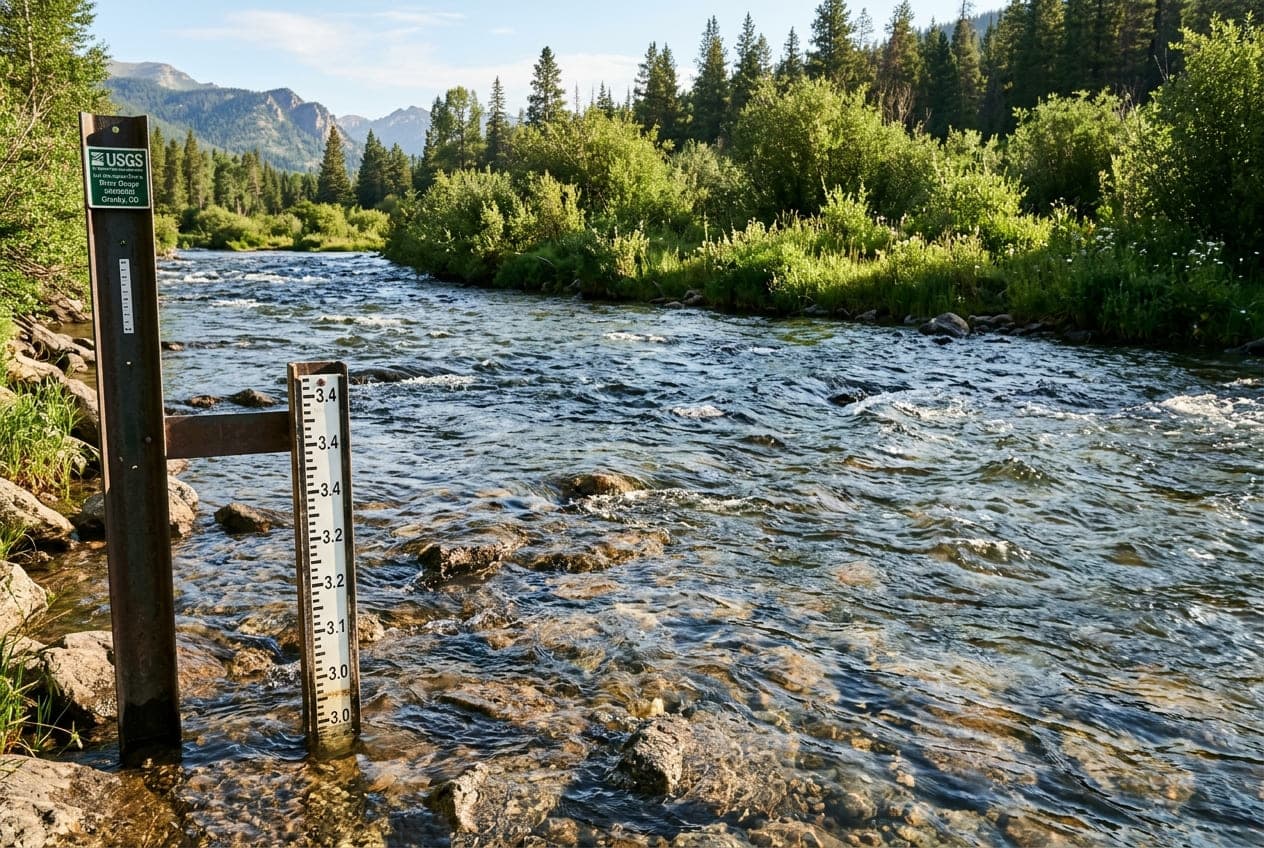
To an untrained observer, a whitewater rapid appears as chaotic, violent churning water. To an experienced paddler, rafter, or wade fisherman, a rapid is a predictable, legible map of hydrodynamic physics.
Water always follows the path of least resistance governed by gravity, channel slope, bottom friction, and momentum. Once you learn to interpret the language of river features, you can navigate moving current with control, spot hazards hundreds of yards upstream, and identify resting zones.
Here is the essential guide to reading river currents.
1. The Core Rule: Laminar Flow vs. Channel Friction
River water does not move at a single uniform speed across the channel:
- Fastest Water (The Threweg): Water flows fastest near the center of the river channel, just below the surface, where friction against the banks and bottom is minimized.
- Slowest Water: Water dragging along shallow rocky banks or against coarse gravel bars moves significantly slower due to boundary layer friction.
- Current Velocity Differential: When fast-moving main current rubs against slow or static water, shear lines and micro-whirlpools form along the boundary.
2. Downstream V vs. Upstream V: The Most Important Visual Clue
When scouting a rapid from shore or your boat, look for V-shaped water formations:
| Feature Type | Visual Appearance | What It Means Under the Surface | How to Navigate |
|---|---|---|---|
| Downstream V (The Tongue) | The point of the “V” points downstream, forming a smooth, dark green chute between two converging obstacles. | The deepest, cleanest volume of water flowing through the gap between two shallow rocks or gravel shoals. | AIM FOR THE CENTER. This is your primary safe entry route into the rapid. |
| Upstream V (Rock / Hazard) | The point of the “V” points upstream, with white aerated spray peeling around the point like water splashing off a ship's bow. | Water is splitting around a shallow, submerged boulder or obstacle situated directly at the apex of the V. | AVOID THE APEX. Steer your craft away from the point to avoid grounding or wrapping your hull. |
3. Eddies and Eddy Lines: The River's Brakes
An eddy is an area of calm, reverse, or static water located directly downstream of an obstruction (such as a large boulder, island, or riverbank outcropping).
The Physics of an Eddy:
As main current rushes past an obstacle, it creates a void or pressure deficit behind the rock. Water from downstream rushes upward and back upstream to fill this void, creating an upstream-flowing circular current.
- The Eddy Line: The high-friction boundary line separating downstream-rushing current from upstream-flowing eddy water. Crossing an eddy line requires edging your boat downstream to prevent the opposing currents from grabbing your upstream gunwale and flipping you.
- Tactical Value: Eddies are safe resting zones, scouting perches, and emergency rescue staging areas where you can pause mid-rapid.
4. Cushion Waves (Pillows) vs. Sieve Pockets
When high-velocity current collides directly with a vertical rock face or cliff wall:
- Cushion Wave (Pillow): Water compresses against the upstream face of the rock and rebounds upward, creating a pressurized mound of green water that naturally pushes oncoming boats away from the rock face.
- When Cushions Fail (Undercut Rocks): If the rock face has been hollowed out or eroded underneath water level, the water does not bounce off—it pours directly beneath the ledge. Undercuts and sieves are among the most lethal geological hazards in river running because water flows through while boat hulls and swimmers are pinned against submerged rock ceilings.
5. Wave Trains and Standing Waves
Below a steep constriction (such as a downstream tongue), excess kinetic energy dissipates through a series of rhythmic, stationary swells called a wave train.
- Standing Waves: Unlike ocean surf that travels toward the beach, standing river waves remain stationary relative to the shoreline while water flows through them.
- Wave Characteristics: Clean, green standing waves provide smooth, rollercoaster-like rides. As gradient or flow increases, waves become larger and may “break” upstream with white foamy crests.
6. Holes and Hydraulics: Smiling vs. Frowning Holes
When water pours over the crest of a submerged boulder or ledge, it plunges downward into a deep pool, creating a vacuum that recirculates surface water back upstream toward the rock. This feature is known as a hole, hydraulic, or reversal.
Understanding whether a hole will allow a swimmer or boat to flush through depends on its geometry:
Smiling Holes (Safe / Flushing)
- Shape: The sides of the hole curve downstream, resembling a smile when viewed from upstream.
- Hydraulics: Water at the center recirculates, but water along the wings flows swiftly downstream. Swimmers or rafts that enter the hole are pushed naturally toward the downstream edges and flushed free.
Frowning Holes (Dangerous / Retaining)
- Shape: The sides of the hole curve upstream, resembling a frown when viewed from upstream.
- Hydraulics: Water on both wings recirculates inward toward the center. Anything entering the hole—debris, boats, or swimmers—is repeatedly trapped in the recirculating backwash. Low-head dams are the most dangerous artificial version of a frowning hydraulic.
7. Vegetative Hazards: Strainers and Sweepers
A strainer is formed when trees, root balls, downed branches, or bridge pilings fall into river current:
- The Threat: Water passes freely between the branches, but solid objects (boats, limbs, human torsos) are pinned instantly against the wooden sieve by thousands of pounds of hydrostatic pressure.
- Zero Buoyancy: Even a high-flotation PFD cannot counteract the downward suction of current forcing water through submerged limbs.
- Rule of Thumb: Always scout riverbanks on blind bends and maintain a minimum 50-foot lateral safety buffer from any downed timber.
Want to see this in action? Check real-time river conditions near you.
Explore All Rivers →